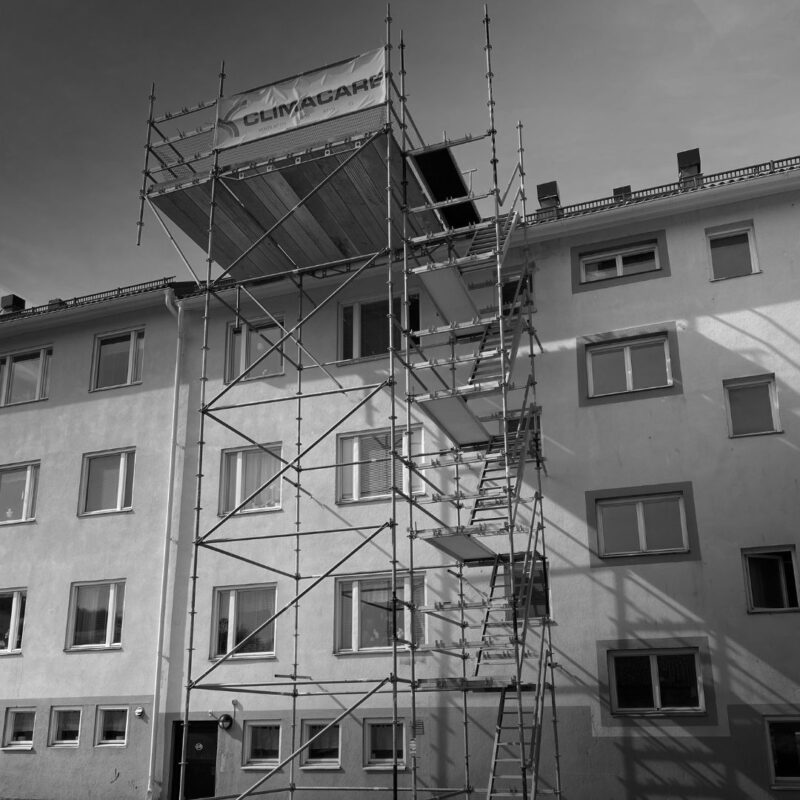
The project involved a complete upgrade of the properties’ HVAC and ventilation systems. The measures included, for example, the installation of heat pumps, new ventilation units with heat recovery, and the replacement and renovation of existing systems. The bulky ventilation ducts in stairwells and attics posed a particular challenge.
“We’re especially proud of how we overcame the technical challenges posed by the limited space, and that we managed to coordinate efforts across our disciplines seamlessly,” says Johan Sjöström, CEO of Climacare.
Collaboration in Practice
The project was carried out as a turnkey contract, with Climacare and Climacare Rörteknik responsible for both ventilation and HVAC. The strong collaboration between the two disciplines and Kungälvsbostäder is highlighted as a key factor in the project’s success. Asbestos was also discovered in certain parts of the property during the project.
This required clear communication between the contractor, the client, and the tenants.
“Communication with the client has been excellent throughout the entire process. That creates a sense of security, especially in a project where the work was carried out in people’s homes and in sensitive areas such as bathrooms,” says Johan Sjöström.
Results and Benefits
The result was a modernized building with an improved indoor climate, a reduced risk of Legionella thanks to the calibration of the heating and cooling circuits, and increased redundancy in the event of a district heating outage. The new solution also makes it possible to control domestic hot water production based on current energy prices, providing better control over operating costs. As a result of these efforts, energy consumption in the building has decreased by approximately 158 MWh between October 2023 and October 2025.